Roofing Guide
What Is Roof Decking?
Roof decking is the hidden layer every other part of your roof depends on. Here is what it is, what it is made of, and the weight numbers that matter — answered first, explained in full below.
Open 24/7 · 3555 Kraft Rd Unit 130, Naples, FL 34105 · Free written estimates
The Short Answer — Roof Decking Facts and Figures
Roof decking (also called sheathing) is the layer of wood panels fixed directly onto your rafters or trusses. Underlayment and shingles, tile or metal are fastened to it — it is the structural skin of the roof. Key figures:
- Standard thickness: most Naples homes use 15/32-inch or 1/2-inch panels (radiant-barrier and tile roofs often 19/32 or 5/8 inch).
- Panel size: 4×8 ft sheets of plywood or OSB (oriented strand board) — the two materials used on the vast majority of Florida homes.
- Roof dead load: decking itself weighs about 1.5 psf (OSB) to 2–2.5 psf (plywood) per layer. A typical roof dead load — decking plus underlayment plus covering — runs about 10 psf for a shingle roof and can reach 18–25 psf for concrete or clay tile, which is why tile conversions require a structural review.
- Why it matters to you: rotted or delaminated decking cannot hold fasteners. In Florida wind, that is the difference between a roof that stays on and one that peels — which is why decking condition is checked at every roof inspection and replaced during a roof replacement.
Table of Contents
What Roof Decking Actually Does
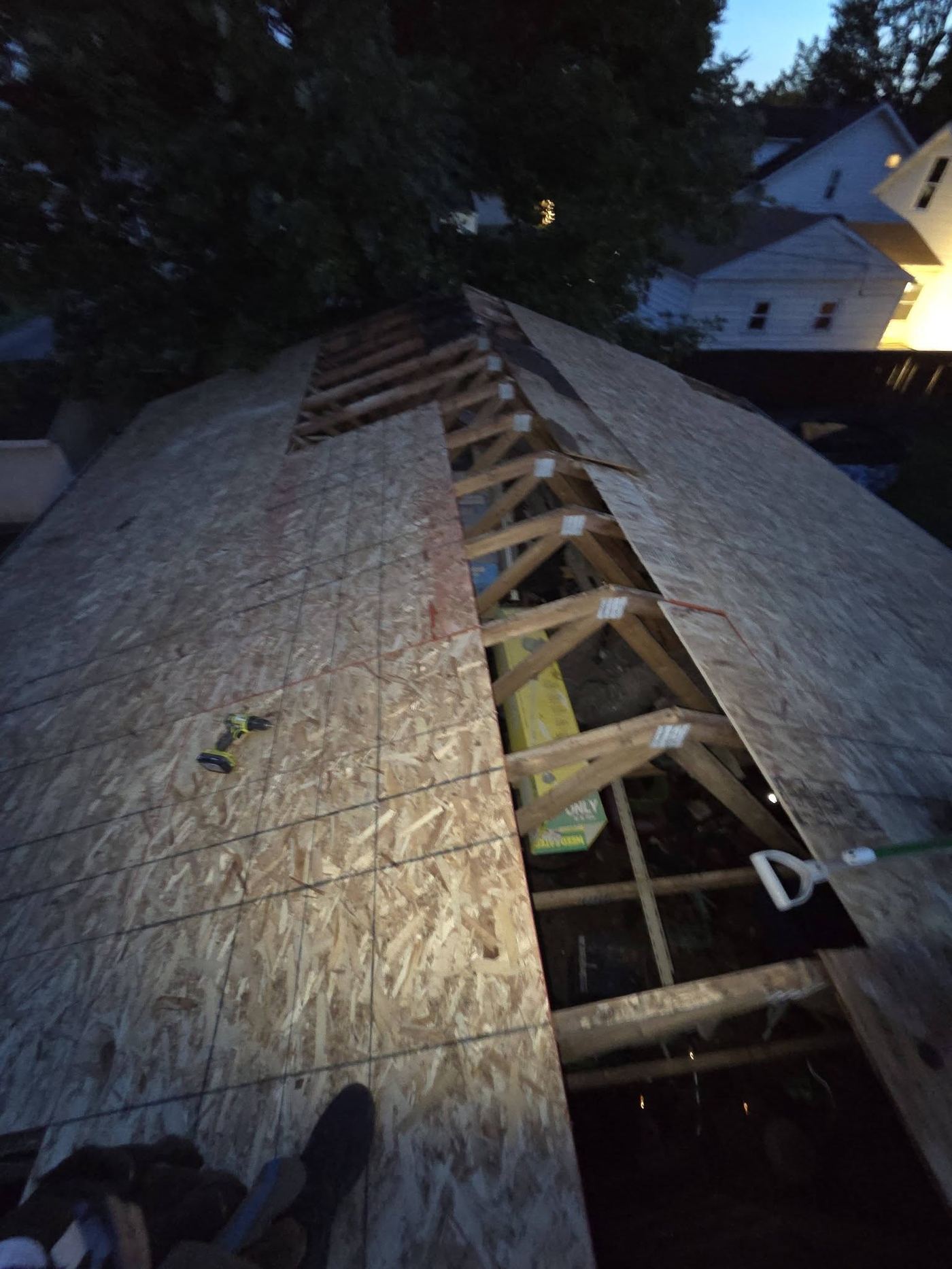
Decking a roof means fastening those panels across the rafters to create one continuous surface. That surface does three jobs: it gives every nail and screw in your roofing something solid to bite into, it ties the rafters together so the roof acts as one structure in hurricane winds, and it supports the full weight of the covering above it. When you see a roof mid-replacement with its covering stripped, the wood you are looking at is the decking.
What to Use for Roof Decking: Plywood vs OSB
Plywood costs more, resists moisture swelling better, and holds fasteners slightly better after repeated wetting. OSB costs less, is consistently flat, and is used on most new Florida homes — but its edges swell if they sit wet, so it must be kept dry during installation. For Naples, either performs when installed correctly with the required panel clips and gaps; what matters more is that damaged sheets are replaced, not roofed over. Older Naples homes may have spaced board decking (1×6 planks) — that is usually overlaid or replaced during a modern re-roof.
Roof Dead Load, Explained Simply
Dead load is the permanent weight the roof structure carries: decking, underlayment, the covering itself, and anything fixed to it. Engineers design trusses around a typical roof dead load for the intended covering. Shingle roofs sit near 10 psf total; tile roofs can double that. This is why you cannot simply swap shingles for concrete tile on an older home without checking the structure first — and why an honest roofer raises decking and dead load before quoting a conversion, not after.
Signs Your Decking Is Failing
- A spongy or bouncy feel when walking the roof
- Sagging lines between rafters visible from the street
- Water stains, mould or daylight visible on attic-side decking
- Shingles or tiles that keep loosening because fasteners have nothing to hold
- Delaminated, flaking OSB edges at eaves and valleys
Decking During a Roof Replacement
On every tear-off we inspect the deck sheet by sheet. Sound decking stays; rotted or delaminated panels are replaced and photographed, and your written estimate states the per-sheet price in advance. It is one of the least glamorous parts of a roof replacement and one of the most important for wind performance. If you want to know what is under your roof before committing to anything, book a free roof inspection — we will show you the photos.
Frequently Asked Questions
Is roof decking the same as sheathing?
Yes — roof decking, roof sheathing and the roof deck all mean the same layer of panels fixed to the rafters or trusses, under the underlayment and roofing material.
Can rotted decking be repaired in sections?
Yes. During a re-roof, individual rotted or delaminated sheets are cut out and replaced — your estimate should list decking replacement per sheet so there are no surprises.
Does new decking add much weight to my roof?
Decking itself is part of the roof's standard dead load (about 2–3 psf for plywood or OSB). The big weight decisions are the covering: tile adds far more load than shingle, which is why conversions need a structural check.
Want to Know What Is Under Your Roof?
Call Gulf Roofers Naples any time — we answer 24/7 across Naples, FL.